Tag: NERC

  • Why AI Might Not Get the Power It Needs

    Why AI Might Not Get the Power It Needs

    Part 3 of a series on what I learned by accident when I started paying attention to my electricity bill.


    In Post 2, I wrote about the grid as a precision-balanced machine and ended with the Virginia 2024 incident, in which sixty data centers disconnected themselves from the grid in milliseconds because of a routine equipment fault, dumping 1,500 megawatts of load that the system had to scramble to absorb. I said the event was a preview of something larger that’s already underway.

    This post is about that something larger.

    The thing I want to convey here is hard to convey because the scale is genuinely difficult to grasp. The AI buildout that’s happening right now, in 2026, is not an evolution of the previous data center industry. It’s a different category of thing, growing at a different rate, with different operational characteristics, and the existing grid was not built for it. Neither were the rules governing it.

    I am going to try to explain how big this is, why the grid can’t keep up with it, what the companies building it are doing in response, and why none of the official solutions are likely to work in time.

    The size of the thing

    The previous generation of data centers, the ones that hosted your email and your cloud storage and your video streaming, drew power in the tens of megawatts. A typical large data center campus, in 2018, might have pulled 40 to 80 megawatts. That was a substantial customer for a regional utility but not a transformative one.

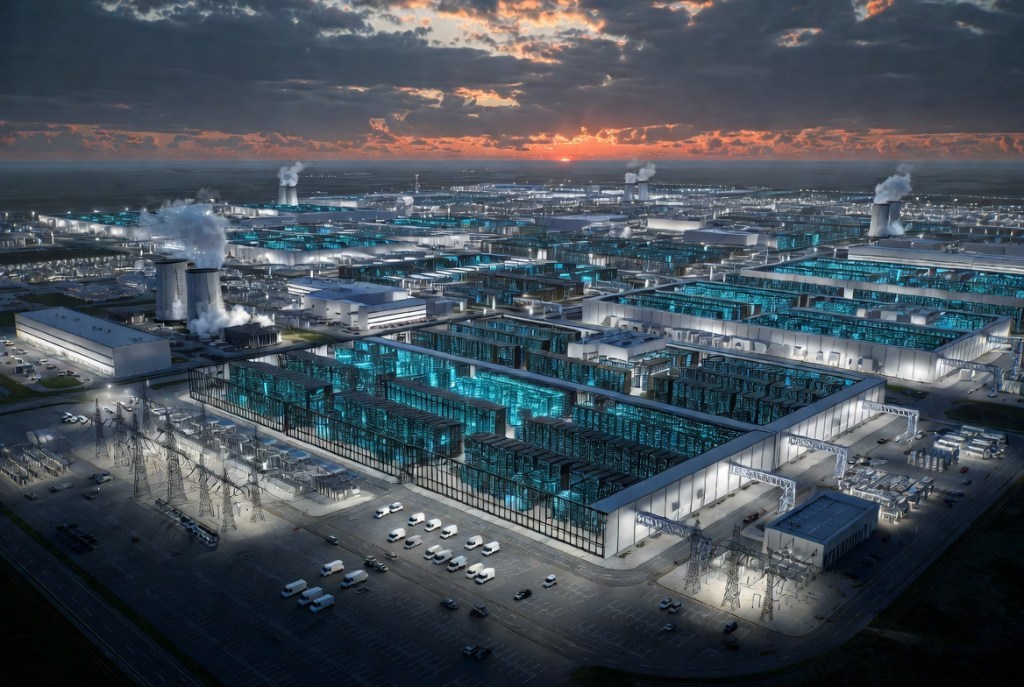
    AI training data centers operate at a different order of magnitude. A single hyperscale AI campus today is being designed for one to two gigawatts of power draw. Plural gigawatts. That is, one to two thousand megawatts per campus. Per campus.

    To put a single gigawatt in context: it is roughly the power output of a large nuclear reactor. It is also roughly the average power consumption of a city of half a million people. When a hyperscaler builds a one-gigawatt AI training facility, they are building, from the grid’s perspective, the equivalent of dropping a small city onto the system, in one location, all at once.

    And they are not building one campus. Microsoft, Google, Amazon, Meta, and Oracle are each building multiple multi-gigawatt campuses, simultaneously, across multiple states. Then there are the OpenAI and xAI and CoreWeave and other dedicated AI infrastructure companies doing the same. And the regional utilities, all of them, are receiving interconnection requests for these campuses faster than they can process them.

    Projections of how much electricity AI will consume by 2030 vary, but the credible range is roughly 300 to 500 terawatt-hours of new annual demand in the United States alone. The lower end of that range is bigger than the entire electricity consumption of California. The higher end is bigger than the entire electricity consumption of Germany. Either way, what we are talking about is adding the equivalent of one of the largest power-consuming economies in the world to the existing U.S. grid, in five years.

    This was not in any utility’s planning model as recently as 2022.

    The queue that never empties

    When a new generation project or a new large customer wants to connect to the grid, they don’t just plug in. They enter what’s called an interconnection queue. The utility studies whether the existing transmission system can handle the new connection, identifies necessary upgrades, calculates who pays for what, and eventually issues the agreements that allow the connection to proceed.

    This process has always taken time. But the data published by Lawrence Berkeley National Laboratory, which tracks the U.S. interconnection queue, shows that it has stopped functioning at the scale it now needs to operate. The current queue contains over two thousand three hundred gigawatts of proposed projects. That is roughly double the entire installed generation capacity of the United States. The queue contains, in proposed form, a second United States grid.

    But the queue does not turn proposals into operating projects. Of all the projects that entered the queue between 2000 and 2019, only about thirteen percent had reached commercial operation by the end of 2024. The rest were withdrawn, cancelled, or still waiting after years of review.

    Even projects that do get built spend an average of about five years in the queue before they begin operating. That number has been getting worse, not better, over the past fifteen years.

    For a hyperscaler trying to build a data center that needs to be operational in 18 to 24 months, this is a structural impossibility. The grid expansion that would be required to serve them, on the timeline the regulated utility process can deliver, cannot happen in time. By the time the utility finishes the studies, files the rate cases, builds the new transmission line, and energizes the new substation, the data center has already been operating, or has already been abandoned.

    So the hyperscalers stopped waiting.

    Bring your own power

    Sometime between late 2024 and early 2026, the hyperscaler industry made a strategic pivot that did not get much press coverage but is going to reshape American electricity infrastructure. They decided to stop relying on the public grid to power their AI data centers.

    This is referred to in the industry as “behind-the-meter generation” or “bring your own power.” What it means in practice is that the hyperscaler builds its own dedicated power generation, on or adjacent to the data center site, and uses that generation as the primary power source. The grid connection becomes a backup, not the primary supply.

    The scale of this pivot is remarkable. As of late 2025, industry trackers were following approximately forty gigawatts of announced behind-the-meter generation tied to specific data center projects. To repeat: that is forty thousand megawatts of dedicated power plants, mostly natural gas, being built outside the regulated utility planning process, on private timelines, by companies that are not in the power business and have never operated power infrastructure at scale.

    The poster child for this strategy is xAI’s Colossus facility in Memphis, which Elon Musk built and brought online faster than any data center of comparable size in American history by deploying dozens of portable natural gas turbines on site, in many cases before the permits to operate them had been granted. The local air quality district and the Tennessee state environmental regulators have been playing catch-up ever since. Fines have been issued. Operations have continued.

    The point is not that Musk is uniquely cavalier, although he might be. The point is that the economic logic of the AI buildout makes regulatory delays unacceptable to the companies building it. A hyperscaler that waits two years for permits while a competitor builds in six months loses the AI race. The decision tree is not really a tree at all. It is a single branch: build now, deal with consequences later. Pay the fines. Settle the lawsuits. Keep the data center running.

    If you are a regulated utility trying to integrate this customer into your service territory, you are not actually negotiating with a customer. You are watching a customer build their own utility, on their own timeline, and asking you to please connect a backup line when you can.

    The rules that don’t exist yet

    The Virginia 2024 incident I wrote about in Post 2, in which sixty data centers disconnected in milliseconds, was not an isolated event. The North American Electric Reliability Corporation, NERC, has identified multiple similar incidents in both the Eastern Interconnection and the Texas grid since 2022. In each case, large computational loads have unexpectedly disconnected, in coordinated waves, in response to disturbances that the grid would normally have absorbed without incident.

    In September 2025, NERC issued a Level 2 alert about this. A Level 2 alert is a regulatory step below an emergency, asking the industry to develop better practices for handling large computational loads. The response from the industry was, by NERC’s own assessment, inadequate. Most of the entities NERC asked to develop better practices did not develop better practices.

    So on May 4, 2026, just two weeks ago, NERC escalated to a Level 3 alert. A Level 3 is the highest level of alert NERC issues. It identifies “essential actions” that grid operators and transmission planners must take to address an immediate reliability risk. NERC has not issued a Level 3 alert about large loads before. The previous Level 3 alert, issued in 2024, was about a different concern entirely, the behavior of solar and wind resources during grid disturbances.

    The current alert reflects a regulatory body that has run out of patience with the pace of industry response. NERC’s modeling, published earlier this year, indicates that the coordinated disconnection of two thousand megawatts of data center load, which is well within the operational range of a single hyperscale campus, could destabilize twenty percent of the Eastern Interconnection. That would be a blackout on the same scale as 2003.

    But here is the part that I find genuinely difficult to absorb. The Level 3 alert does not actually require data centers to do anything differently. It requires transmission planners and grid operators to study the problem, model the risks, and report back. The deadline for the initial response is August 3, 2026. The data center operators themselves are not directly bound by the alert at all.

    The reason for this regulatory gap is structural. NERC’s mandatory reliability standards apply to entities classified as part of the Bulk Electric System, which historically has meant generators and transmission operators. Data centers, even gigawatt-class ones, are classified as customers. They are bound by their interconnection agreements with their local utility, but they are not subject to the same mandatory federal reliability standards that govern, say, a nuclear power plant or a regional transmission organization.

    NERC is working on changing this. There is a process underway to create a new classification called a Computational Load Entity, which would subject large data centers to mandatory reliability standards. The estimated timeline for that process, according to industry analysts working on it, is somewhere between three and five years.

    In the meantime, data centers continue to interconnect at the pace of new construction, under existing rules, with the kind of internal protection systems that produced the Virginia 2024 incident, on an honor system that depends on the data center operator picking up the phone when the grid operator calls.

    The honor system problem

    I want to spend a moment on this, because when I learned how the current coordination between data centers and grid operators actually works, I was genuinely surprised.

    When a major grid disturbance happens and data centers trip themselves offline to backup power, the process of bringing them back online has to be staggered. If sixty data centers all reconnected to the grid simultaneously, you would create the opposite problem from the disconnection, an instantaneous fifteen-hundred-megawatt load step that the grid would have to absorb in the other direction.

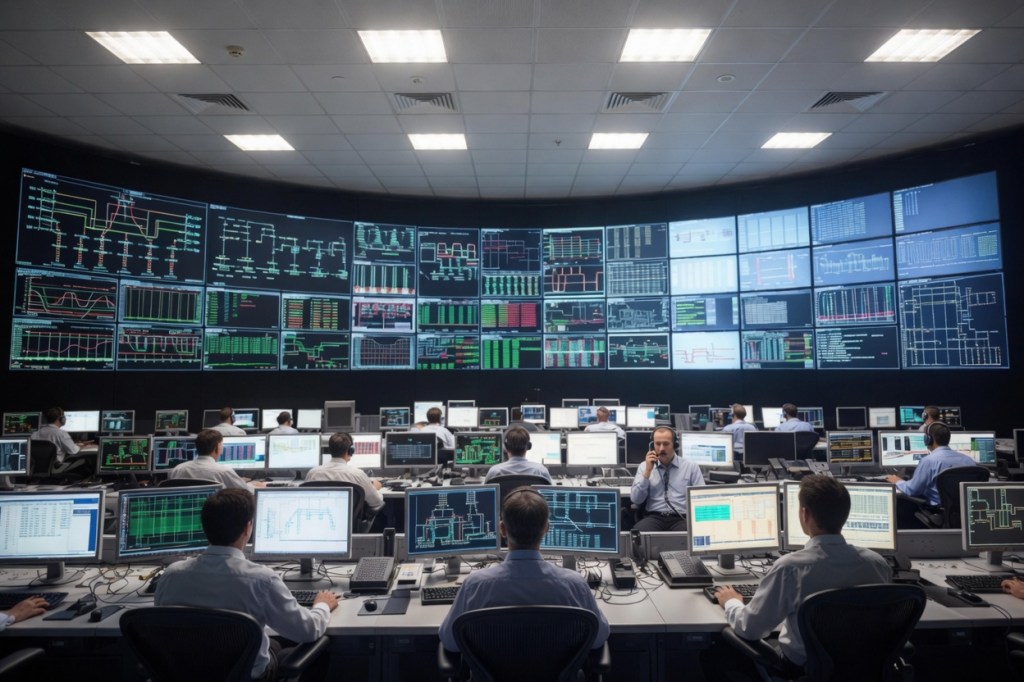
    The way this is currently managed is largely by phone call. The grid operator’s control room calls the data center operations centers. They coordinate a staggered reconnection. The data centers cooperate.

    There is no technical mechanism that prevents a data center from reconnecting whenever it wants. The automatic transfer switches that physically reconnect the facility to the grid are owned and controlled by the data center, not the utility. The utility could, in an extreme case, manually open the breaker on its side of the connection, but this is a last-resort action, not an automated safety system.

    The entire system depends on the data center operator choosing to cooperate. Which has worked so far, because the operators involved have been hyperscalers with sophisticated operations teams who understand the consequences of uncoordinated reconnection and have working relationships with their grid operators. But it depends on goodwill, scaled, in an industry where the willingness to pay fines as a cost of operating quickly is a documented business strategy.

    A senior grid planner I read recently put it bluntly: the current arrangement works because the number of relevant data center operators is small enough to coordinate by phone. As that number grows, and as the diversity of operators grows beyond a handful of hyperscalers to include hundreds of smaller AI startups, colocation providers, and crypto miners, the assumption that everyone will cooperate becomes thinner.

    The collision

    So here is where we are.

    The AI industry is building data center capacity that will dwarf any new demand source the U.S. grid has absorbed in its entire history. The companies building it are doing so on private timelines, with private generation, often outside the regulated planning process, in many cases without waiting for the permits that would normally be required. The regulatory body responsible for grid reliability has acknowledged that current rules are inadequate but cannot create new rules faster than the buildout proceeds. The technical coordination between data centers and the grid is governed largely by phone calls and cooperative agreements that depend on goodwill.

    This is the operating condition of American electricity infrastructure right now. Not a future scenario. The current reality.

    The grid will not collapse next week. The grid is more resilient than this description might suggest, because of the decades of engineering and regulatory effort that went into making it resilient. But the margin of safety that grid planners used to be able to count on is shrinking, fast, and the people responsible for managing the system are publicly acknowledging that they cannot keep up with the pace of change.

    In the final post in this series, I want to bring all of this back to where we started. What does any of this mean for someone like me, a residential customer in Missouri running a dishwasher at ten PM? What is going to happen to my electric bill, and to yours? And what, if anything, can ordinary ratepayers actually do about it?

    That’s next week.


    Next Sunday: Why Your Electric Bill Is About to Get Weirder. What the AI buildout means for the rest of us, and what we can actually do.
  • The Grid Behind the Grid

    The Grid Behind the Grid

    Part 2 of a series on what I learned by accident when I started paying attention to my electricity bill.


    After Post 1 went up, the question I couldn’t stop turning over was this: if the 10 PM cutoff on my Ameren bill maps to actual physics on a continental-scale grid, then what does that grid actually look like? Not in a metaphorical sense. Mechanically. What is the thing on the other side of my wall outlet, and how does it stay running?

    I went looking, and the answer turned out to be more remarkable than I expected, and also more fragile than I expected. By the end of what I learned, I had stopped thinking of the grid as a robust piece of infrastructure that occasionally fails, and started thinking of it as something closer to a precision-balanced machine that succeeds every day for reasons that aren’t obvious until you understand them.

    This post is about that machine. It’s also about the time it almost broke, what we did to prevent that from happening again, and why something very similar is now happening on purpose, at scale, in ways that the people building it may not fully appreciate.

    A bicycle, going exactly ten miles per hour

    The single most useful way I’ve found to think about how the grid works is this:

    Imagine you’re riding a bicycle, and someone tells you that you must maintain exactly 10 miles per hour. Not 9.99, not 10.01. Exactly 10. Forever. The route ahead has hills you can’t see coming. When the road slopes up, you have to pedal harder. When it slopes down, you have to ease off, or maybe even brake. And if at any point you drift more than half a percent off speed, the bicycle disintegrates.

    That’s the grid.

    The “speed” in this metaphor is frequency. In North America, the grid runs at 60 cycles per second, also written as 60 Hz. Every generator on the grid spins at exactly this frequency, all the time. The frequency is the speed of the bicycle, and it has to stay locked at 60 Hz the way the bike has to stay locked at 10 mph.

    What makes this difficult is the hills, which are changes in demand. Every time someone turns on an air conditioner, opens a refrigerator, or starts a dishwasher, the grid encounters an uphill. The bicycle has to pedal harder. Every time someone turns off a load, the grid encounters a downhill, and has to ease off. And all of this is happening continuously, across millions of customers, every second.

    Grid operators tolerate about ±0.05 Hz of deviation from 60 Hz before they start getting nervous. That’s about 0.08% off speed. If the frequency drifts beyond roughly ±0.5 Hz, less than 1% off, protective equipment starts tripping generators offline to keep them from damaging themselves. That’s the bicycle disintegrating. Once a few generators trip, the remaining ones have to carry their load, which usually pushes frequency further out of bounds, which trips more generators. The cascade can run faster than anyone can intervene.

    So the bicycle has to stay at exactly 10 mph, on terrain it can’t see, with a margin of error under one percent, or it falls apart.

    Now imagine the bicycle is the size of a continent.

    Half a continent, in perfect sync

    The grid I’m part of, here in Missouri, is connected to a synchronous network called the Eastern Interconnection. It covers everything from the Rocky Mountains east to the Atlantic, plus most of eastern Canada. Roughly 39 states and 5 Canadian provinces.

    Every generator in that footprint, from a nuclear plant in Florida, to a coal plant in Ohio, to a wind turbine in Manitoba, to the natural gas plant down the road from my house, is spinning at exactly the same frequency, in exactly the same phase, every second of every day.

    That sentence took me a while to absorb when I first read it. Not approximately the same frequency. Not averaged over a minute. Right now, this exact second, hundreds of thousands of rotating machines spread across thousands of miles are all turning together in perfect synchronization. If they fell out of sync, the system would tear itself apart in seconds.

    This is achieved through what’s called synchronous coupling. When a generator is connected to the grid, the grid itself acts like a giant flywheel pulling it into line. A generator trying to speed up gets resisted by the inertia of every other generator. A generator trying to slow down gets pulled back by them. All those spinning turbines are mechanically locked together, by electromagnetism, into a single coordinated machine the size of half a continent.

    That machine is what we mean when we say “the grid.” Not the wires. The wires are just the connections between the rotating parts of the bigger machine.

    The thing that coordinates the bicycle

    Coordinating this machine in real time is the job of regional grid operators. The one that handles my electricity is called MISO, the Midcontinent Independent System Operator. MISO doesn’t own generators or transmission lines. It’s a coordinator, a market operator, and a referee.

    What MISO does, in simplified terms, is run an auction. Every five minutes, MISO collects bids from generators across its footprint, fifteen states’ worth of them, and figures out the cheapest mix of plants to run to meet projected demand for the next five minutes. The cheapest generation wins. That coal plant in Illinois, that wind farm in Iowa, that gas plant in Louisiana, all bidding into a single market that picks the lowest-cost combination.

    Underneath that five-minute market is something faster and more nervous. Every four seconds, MISO sends signals to specific generators telling them to ramp up or down a little, to keep the system frequency locked at 60 Hz. This is called Automatic Generation Control, and it’s how the bicycle stays at exactly 10 mph in real time. If frequency starts drifting up, MISO tells some generators to ease off. If it drifts down, MISO tells others to push harder.

    And underneath that, faster still, is the inertia of the machines themselves. When a sudden change hits the grid, the spinning mass of every connected generator absorbs the shock automatically, for the first few seconds, before any human or computer can react. That stored kinetic energy is what gives operators time to respond at all.

    So the grid is layered. Spinning inertia handles the millisecond response. AGC handles the four-second response. The five-minute market handles the minute-to-minute economic dispatch. Human operators handle the longer-term decisions about which plants to bring online or shut down across hours and days.

    It works, almost all of the time. But not always.

    The seven seconds it almost all came apart

    On August 14, 2003, a transmission line in northern Ohio sagged in the heat of an afternoon and touched a tree. That single point of contact tripped the line offline. On most days, that’s a routine event. The grid is designed to handle the loss of any single component without cascading failure.

    But on this particular day, the monitoring software at FirstEnergy, the Ohio utility responsible for that section of grid, had crashed. Operators didn’t know the line had failed. They didn’t take corrective action. Power that had been flowing on the tripped line had to find another path, so it flowed onto adjacent lines, overloading them, until they tripped too. Now more lines were down, and the remaining ones had to carry even more power, until they tripped, until a 3,500 megawatt power surge slammed across the regional grid in a direction operators hadn’t planned for.

    What happened next is one of the strangest and most important things I learned in all of this.

    The grid didn’t fail because it ran out of electricity. There was plenty of generation. What collapsed was something more subtle. As lines tripped offline, the ones still standing couldn’t sustain the voltage that the system needed to keep functioning. Voltage started sagging across the region. Generators saw the sagging voltage and started disconnecting themselves to avoid being damaged.

    Within seconds, the cascade of generators tripping offline created the very crisis the system was designed to avoid. The grid depended not only on real power, but on something called reactive power, an invisible supporting force that maintains voltage across the transmission system and allows electricity to actually flow. When reactive power support failed, the grid could no longer deliver electricity to customers, even though plenty of real power was still being generated.

    The cascade ran across the Northeast in about seven seconds. By the time it stopped, 265 power plants had shut down, over 500 generators had tripped offline, and 55 million people from Detroit to New York to Toronto were in the dark. It took several days to fully restore service.

    The lights went out, not because we ran out of electricity, but because we ran out of the ability to deliver it.

    What we did about it, and what we missed

    The 2003 blackout fundamentally changed how the North American grid is regulated. Before 2003, the reliability standards that grid operators followed were voluntary. After 2003, the U.S. Energy Policy Act of 2005 made those standards mandatory and enforceable, with serious financial penalties for violations. The body that writes those standards, NERC, the North American Electric Reliability Corporation, gained real teeth.

    The grid genuinely got more robust. Better monitoring. Better automated controls. Sensors called synchrophasors that measure grid state thirty times per second across thousands of locations. Operators today have visibility that operators in 2003 could not have imagined.

    We have not had another 2003-scale cascade in the Eastern Interconnection in the more than twenty years since. That’s not nothing. That’s a real achievement.

    But the regulators built that achievement to defend against a particular kind of failure. The 2003 cascade started with a tree branch and a software bug. The whole regulatory regime is oriented toward preventing transmission failures from cascading into voltage collapses.

    It is not oriented toward what happens when a brand new category of customer voluntarily disconnects from the grid in milliseconds, in coordinated waves, by design.

    The thing that already happened, that no one told you about

    On July 10, 2024, in northern Virginia, a piece of relatively routine grid equipment failed. A surge arrester, a device that protects transmission lines from voltage spikes, malfunctioned on a 230 kV line. The transmission line itself didn’t go down catastrophically. The system handled the equipment failure the way it was designed to: it briefly dipped the voltage on that line a few times in rapid succession, called a multi-shot reclose, while the line attempted to recover.

    This is the kind of event that happens dozens of times a year on the U.S. grid. Operators barely notice. The grid absorbs the disturbance and moves on.

    Except this time, sixty data centers were watching.

    The data centers detected the brief voltage dips and, doing exactly what their internal protection systems were designed to do, instantly disconnected themselves from the grid and switched over to their on-site backup power. All of them. In milliseconds. Across twenty-five different substations.

    The total load that vanished from the grid in that moment was about 1,500 megawatts. The equivalent of three large power plants suddenly going offline, except in reverse: instead of generation disappearing, customers disappeared. The grid suddenly had 1,500 megawatts of generation with nowhere to send it. Frequency started climbing. Automated controls had to scramble to dial back generation across the region before something worse happened.

    This event was not widely reported in the general press. It was the subject of a January 2025 NERC incident review that I doubt anyone outside the industry has read. But here is what NERC concluded from it: the way large data centers behave during routine grid disturbances was not anticipated by the planning studies, and current grid stability margins may not be sufficient to handle this new class of customer at the scale they are about to be deployed.

    In May of this year, NERC issued a rare Level 3 alert, the kind of alert reserved for genuinely serious grid reliability concerns, warning that uncoordinated disconnections of large computational loads pose a stability threat to the bulk power system. NERC simulations have suggested that a coordinated disconnection of 2,000 megawatts of data center load, well within the size of a single planned hyperscale campus, could destabilize 20 percent of the Eastern Interconnection. Fifty million people could lose power.

    That is the same scale of blackout as 2003. From the same kind of mechanism: a voltage disturbance, cascading. Except this time, the trigger wouldn’t be a tree branch. It would be a hyperscaler’s protection equipment doing exactly what it was designed to do.

    Where this is going

    I started this post by saying I had stopped thinking of the grid as robust infrastructure and started thinking of it as a precision-balanced machine. I want to be careful about what I mean by that. The grid is not on the edge of collapse. It works, every day, with extraordinary reliability, because of decades of engineering and regulatory effort. The bicycle stays at 10 mph.

    But the conditions the bicycle has to ride through are changing faster than the bicycle is being upgraded. The grid was built and regulated for a world where customers consumed power smoothly and predictably. We are now connecting customers, very large ones, who consume power in ways that the grid was not designed to handle, and we are doing so at a pace that grid planners cannot keep up with.

    Next Sunday, I want to write about the scale of what’s coming. Not the Virginia incident, but the buildout that’s about to dwarf it. Hyperscalers are no longer building data centers in tens of megawatts. They are building campuses in gigawatts. Plural. And they are building these campuses faster than the grid that’s supposed to serve them can be expanded.

    The result is a collision that’s just starting to play out, with implications that are going to reach all the way to your electric bill. I’ll get into it next week.


    Next Sunday: Why AI Might Not Get the Power It Needs. The collision between the AI data center boom and a grid that can’t keep up.